

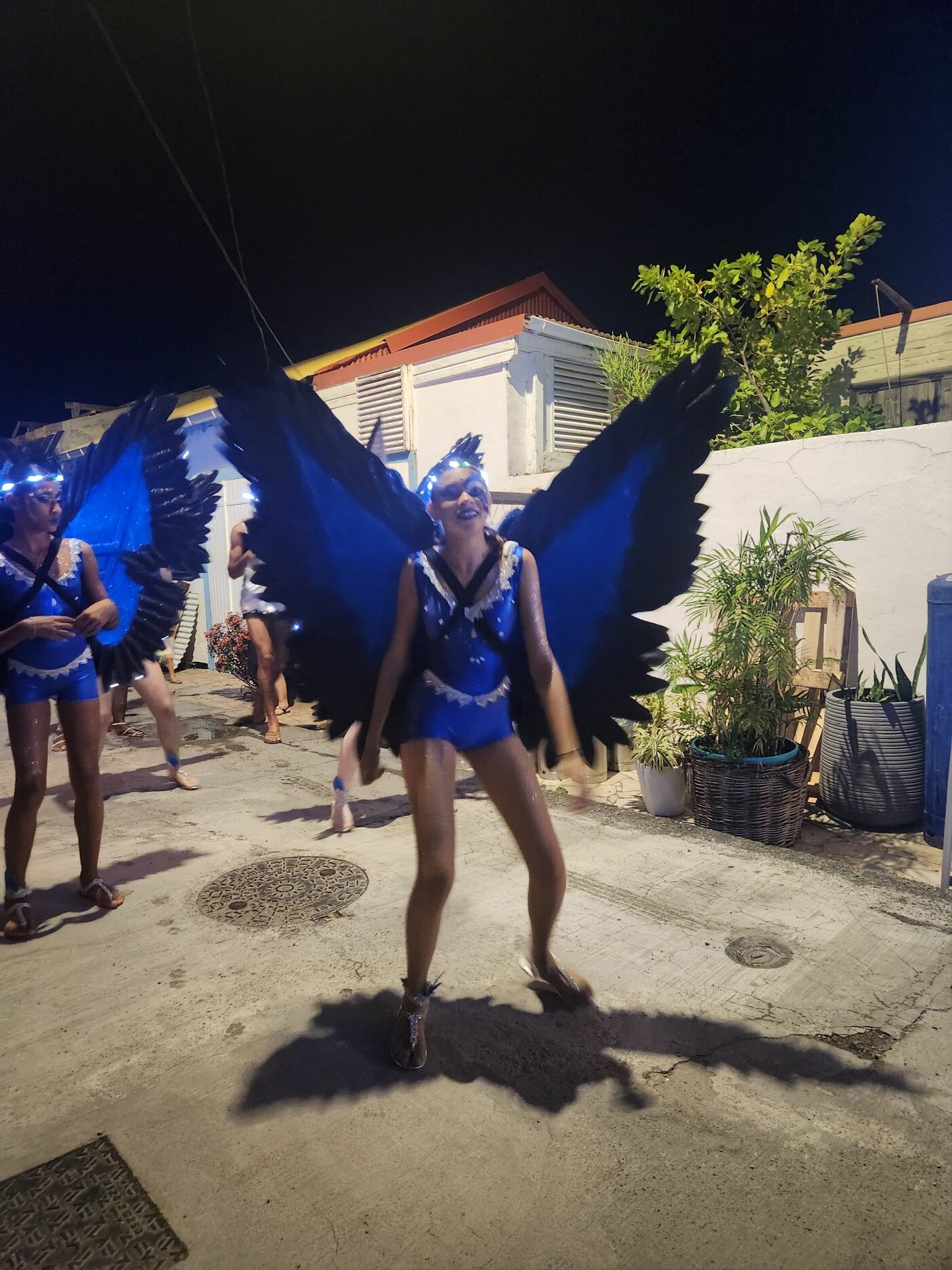


Carnival in Guadeloupe is one of the most important and anticipated cultural events of the year. It is a festive period that blends music, dance, costumes, and traditions, reflecting the rich and mixed identity of the archipelago.
On what date?
Carnival in Guadeloupe generally begins January 1st with a sea bath The bath has begun. This ancestral ritual, a symbol of renewal, marks the beginning of the year and the launch of Carnival. It ends on Ash Wednesday, marking the entry into Lent.


The festivities culminate during Mardi Gras, especially on Sunday, Lundi Gras, Mardi Gras, and Ash Wednesday:
Fat Sunday The grand parades in the streets of major cities in Pointe-à-Pitre, with floats, masks, and impressive costumes.
Mardi Gras It's THE main day in Basse-Terre, with the most extravagant costumes, often humorous or parodic. Each group proposes a particular theme.
Ash Wednesday The festival ends with the famous burial of King Vaval (symbol of the carnival). Festival-goers, dressed in black and red, participate in a symbolic funeral ceremony and the towns fill with marching groups, called “vidé”.”

Ambiance and Meaning
Carnival is both a popular celebration and a space for social critique. Through costumes, songs, and dances, Guadeloupeans express their creativity, pay homage to their history, and address current events with humor and ridicule.
The different types of groups
Here is an overview of the main types of carnival groups you can encounter during the festivities; these groups are the heart of the carnival. They are divided into different categories.
Groups:
- Skin groups Inspired by African traditions, they use drums and percussion. These ensembles get their name from the drums they use, which are covered with goat or sheep skins. They employ traditional instruments such as the chacha (a type of maraca) and the lambi (a seashell transformed into a wind instrument). Their energetic music, often based on “gwo siwo” or “Sen Jan” rhythms, accompanies fast-paced parades called “déboulés.” Among the emblematic groups are Akiyo and Voukoum, and in Basse-Terre, K'MARRON.


- Clear box groups More modern, they include a variety of instruments and showcase elaborate choreography. Recognizable by their colorful costumes, these groups incorporate instruments such as the snare drum and sometimes brass sections, reminiscent of the sounds of Carnival in Rio. Their synchronized choreography and the use of decorated floats add a spectacular dimension to their performances. Notable groups include Toumblack TNS, Magma de Basse-Terre, and Double Face de Pointe-à-Pitre.


- Synths They resemble drum corps with colorful and bright costumes. They are followed by a van equipped with a synthesizer and loud speakers. And sometimes percussionists accompany them.
- Mass groups Focusing on humor and satire, these groups caricature current events through flamboyant costumes and expressive masks. Initially, they were without musicians. They are now often accompanied by instruments. And the "mass" groups use the cracking of whips to set the rhythm for their parades. Mass Moul Massif du Moule is one of the notable representatives of this style.

- Zombie mokes These characters perched on stilts bring a spectacular dimension to parades. Their impressive presence and elaborate costumes add a unique touch to carnival festivities.
Some advice
For your organization
- Download the carnival program France-Antilles
- Attend the grand Sunday Gras Parades in Pointe-à-Pitre and Basse-Terre on Mardi Gras
- Pack light, comfortable clothing. It can get hot, so bring water. It might rain during this time, so an umbrella wouldn't hurt.
- Participate in the nighttime festivities, often accompanied by concerts and entertainment.
- Enjoy a bokit in the food trucks: Agoulou on the Arbaud field in Basse-Terre
The Guadeloupean carnival is a unique experience, full of joy, colors, and music, that perfectly embodies the island's festive spirit.
The Guadeloupe Carnival is a rich and diverse cultural event, featuring a variety of groups with distinct styles and traditions.
To book for next year :
in southern Basse-Terre Green Bananas
On the islands of Les Saintes, on Terre-de-Haut: The Little Villa of the Saints
To help you organize your stay: Intense Green